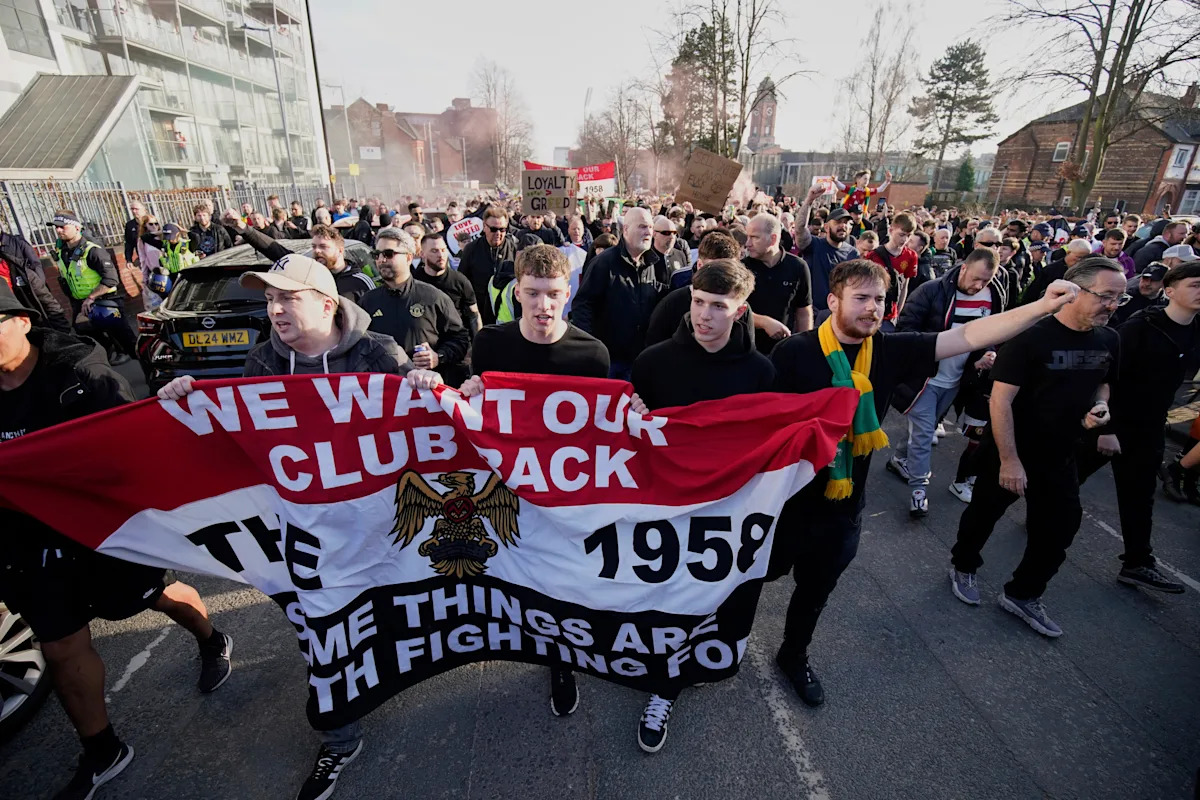
Man United fans protest ownership with march to Old Trafford.
Unrest at Old Trafford: Manchester United Fans March for Change
On a cloudy Sunday in Manchester, the heart of football fandom reverberated with chants of discontent as thousands of Manchester United supporters marched to Old Trafford, protesting against the club’s ownership. The pre-match demonstration was fueled by rising ticket prices, job cuts, and an alarming decline on the pitch, reflecting a growing frustration among fans who feel increasingly disconnected from the club they love.
A Show of Solidarity
Fans were asked to wear black as a symbol of solidarity in their fight for change. The atmosphere was charged with passion, with supporters brandishing banners while lit flares illuminated the gray Manchester sky. This collective display underscored a shared vision among fans: a desperate desire for renewed leadership and commitment to restoring the club to its former glory.
The protest was organized by fan group The 1958, whose commitment to galvanizing support around the issues facing the club has been unwavering. Their determination was palpable in the air as they marched through the streets leading to one of the world’s most iconic stadiums.
Ownership Frustrations
At the forefront of the protest were the simmering frustrations aimed at the Glazer family, who have faced intense criticism since acquiring the club in 2005. Fans argue that the leveraged buyout, which loaded substantial debt onto the organization, has eroded the club’s financial stability and overall performance. The Glazers, who also own the NFL’s Tampa Bay Buccaneers, have been consistently depicted by supporters as distant figures, more interested in profits than the rich legacy of Manchester United.
Amid these longstanding grievances, British billionaire Jim Ratcliffe’s involvement in the club has only added another layer to the complexities fans face. Initially bringing hope when he bought a 25% stake in Manchester United for approximately $1.3 billion last year, Ratcliffe’s tenure has so far been marred by job cuts and underperformance.
The Reality of Job Cuts
Just last month, Manchester United announced up to 200 additional roles would be cut, building upon a prior reduction of around 250 roles. These job losses extend beyond the fans and into the fabric of the club, affecting many who have devoted their careers to the organization. The decision to part ways with iconic figures like manager Sir Alex Ferguson from his ambassadorial role underscores a troubling trend that supporters are rallying against.
The increasing cost of attending matches compounds fan frustration. Ticket prices have surged, with the lowest-priced tickets now escalating to £66, compared to £40 just last season. This reality poses a significant barrier for many loyal supporters who feel their dedication is being exploited financially.
On-Field Struggles
While the fanfare surrounding matches is palpable, the on-field performance of Manchester United has often failed to inspire optimism. Currently languishing in the bottom half of the Premier League standings and still recovering from their worst-ever campaign last season, the team has faced 12 league losses so far this season. Fans seemed all too aware that their club’s participation in the second-tier Europa League may be the only potential shot at silverware, with a return to the prestigious Champions League feeling increasingly distant.
Even mid-match triumphs are punctuated by protests; after the team took the lead against Arsenal through a goal from captain Bruno Fernandes, a familiar chant of “Glazers out!” echoed through the stands, highlighting the bitter juxtaposition between success on the field and dissatisfaction off it.
Voices from the Stands
Messages of discontent were eloquently captured on banners throughout the ground, with one declaring “RIP FAN CULTURE.” This sentiment resonates deeply with supporters who fear that commercial interests are overshadowing the traditions and values that define Manchester United. Prominent fan groups, like The Red Army, have emphasized the urgent need for collective action, inviting fans to unite against what they perceive as the erosion of their cherished club.
Supporters such as author John Ludden have articulated their distress in blogs, criticizing the current ownership model as one that operates with “ignorance” of the club’s legacy and identity. Inside the stadium, banners calling for an end to the exploitation of loyal supporters serve as a powerful reminder of the ongoing struggle between commercialism and tradition.
The Path Forward?
Despite the strong presence of dissenting voices within the stadium, the Manchester United hierarchy has remained largely silent in response to the protests. When contacted by The Associated Press, the club did not comment on the growing unrest. As momentum builds among fans seeking change, one question looms large: will the powers that be heed the calls for reform, or will they continue to forge ahead, blind to the sentiments of the very patrons that fill the stands?
For further insights into the dynamics of football fandom and club ownership, the BBC Sport website offers extensive coverage and analysis of the current state of affairs in the world of football.