
Bruce Arena doubts quality of USA soccer rivals.
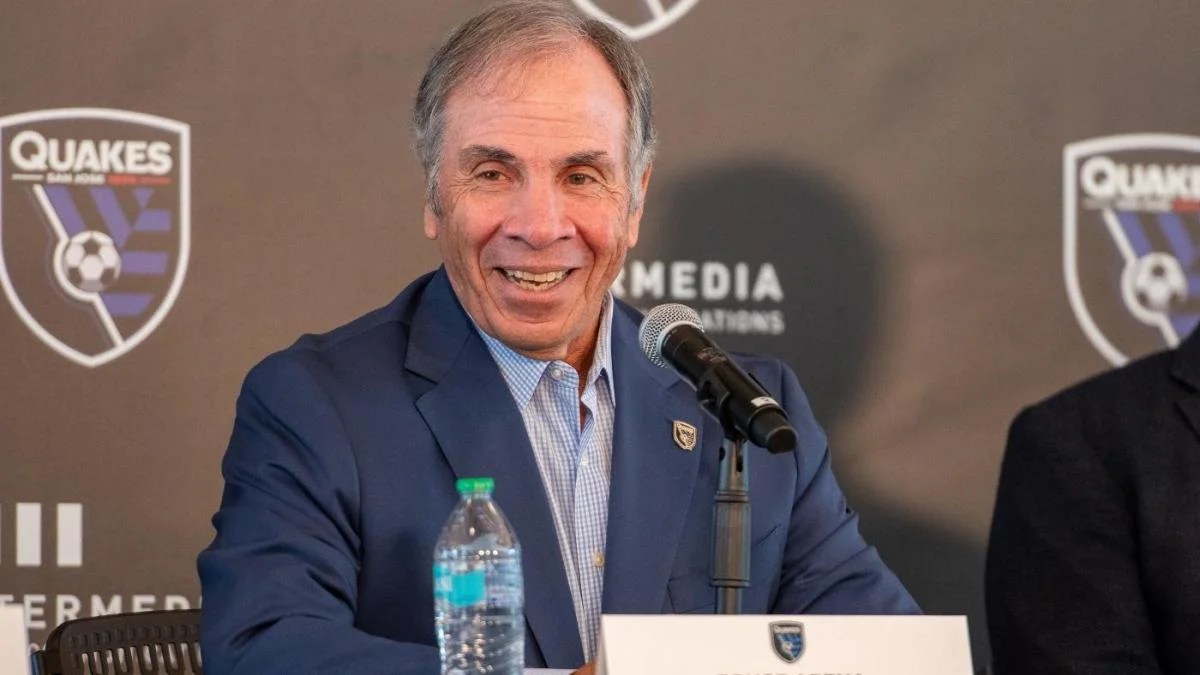
Following a promising January camp, the spotlight is firmly on Mauricio Pochettino and the United States Men’s National Team (USMNT). However, Bruce Arena, the former coach with significant experience, suggests that it may be premature to gauge the team’s true potential until they face formidable opponents on the international stage.
Bruce Arena’s Legacy and Insights
Bruce Arena, who managed the USMNT during two distinct periods from 1996 to 1999 and then again from 2016 to 2017, is a well-respected figure in American soccer. Under his leadership, the team clinched the Concacaf Gold Cup three times and made an unforgettable quarterfinal journey in the 2002 FIFA World Cup. Despite these achievements, Arena’s tenure also witnessed a disheartening phase leading to the failure to qualify for the 2018 World Cup, a stark reminder of the volatility in soccer. Arena recently shared his thoughts on the CBS Sports podcast “Call It What You Want,” casting doubt on the validity of current assessments for Pochettino’s squad.
Importance of Quality Opposition
Arena argues that the competition level in recent fixtures is not robust enough to make sound judgments about the team’s readiness. “Playing games in January is not a good way of measuring where the team’s at,” he remarked, emphasizing that upcoming matches against stronger teams would provide more clarity on the USMNT’s capabilities. While the team has shown promising moments—like a solid 45 minutes of play against Jamaica—these matches have often been against lesser competition, where victory is anticipated rather than earned.
Pochettino’s Quick Adaptation
Since his appointment in September 2023, Pochettino’s focus has been on quickly understanding the American player pool. The January camp provided a useful platform for him to evaluate talents like Diego Luna, Jack McGlynn, and Patrick Agyemang. These players are poised to play crucial roles as the team gears up for a hectic 2025 season filled with Concacaf Nations League and Gold Cup fixtures. Pochettino’s ability to nurture this talent could prove vital as the USMNT sets its sights on the 2026 World Cup.
Preparedness for the 2026 World Cup
Looking ahead, Arena expresses optimism about the USMNT’s prospects in the next World Cup, particularly because the tournament will be hosted in North America. He reflected on the infrastructure improvements since the last time the U.S. hosted the event in 1994, stating, “We’re much more prepared for the World Cup in terms of the quality of our team.” He believes that hosting the event in top-flight stadiums will allow for a more successful and engaging spectacle.
Challenges of Expanded Competition
With the World Cup expanding to 48 teams, the USMNT has a significant opportunity to excel but faces challenges in preparation. The squad currently lacks a signature win against a top-20 FIFA-ranked team outside of Concacaf, the only exception being Iran during the 2022 World Cup. This statistic underlines a pressing need for competitive fixtures to adequately prepare for 2026. Arena points to this as a critical gap in the team’s development, arguing that the lack of challenging matches inhibits growth and competitiveness against elite teams worldwide.
The Road to Competitive Friendlies
As the USMNT prepares for upcoming tournaments like Copa America, the necessity for high-level friendly matches becomes evident. The team’s recent 5-1 defeat to Colombia underscored the potential problems arising from inadequate preparation. Pochettino’s meticulous approach could lead to scheduling essential friendlies that serve as valuable growth experiences for the players. While international schedules involve numerous tournaments, the unique position of the U.S. as a World Cup host nation might provide an advantage, enticing top teams to compete against them.
The Future of American Soccer
With the current trajectory of soccer in the United States, Pochettino’s leadership has the potential to steer the USMNT to new heights. His focus on integrating domestic talent and preparing for higher competition will be crucial. If he can successfully harness opportunities such as friendly matches and international competitions, the groundwork laid could significantly elevate the team’s status leading to 2026. As Arena observes, “By the time the World Cup begins, the U.S. will be prepared to get out of group play, perhaps even challenge for the semifinals.” The unfolding chapters of the USMNT’s journey remain to be seen as the excitement of the upcoming years builds.


